
Kisangani: A City Scarred by Conflict and the Quest for Justice
Kisangani, a city in the Democratic Republic of Congo, serves as a stark reminder of the devastation caused by conflicts driven by economic interests. Situated within the Democratic Republic of Congo (DRC), Kisangani served as the setting for a significant armed conflict in June 2000, which spanned six days and involved the Rwandan and Ugandan armies. This confrontation over the region’s abundant natural resources left a profound impact on the city and its inhabitants, resulting in the deaths of over a thousand civilians and the displacement of countless others.

A Tribute to the Fallen
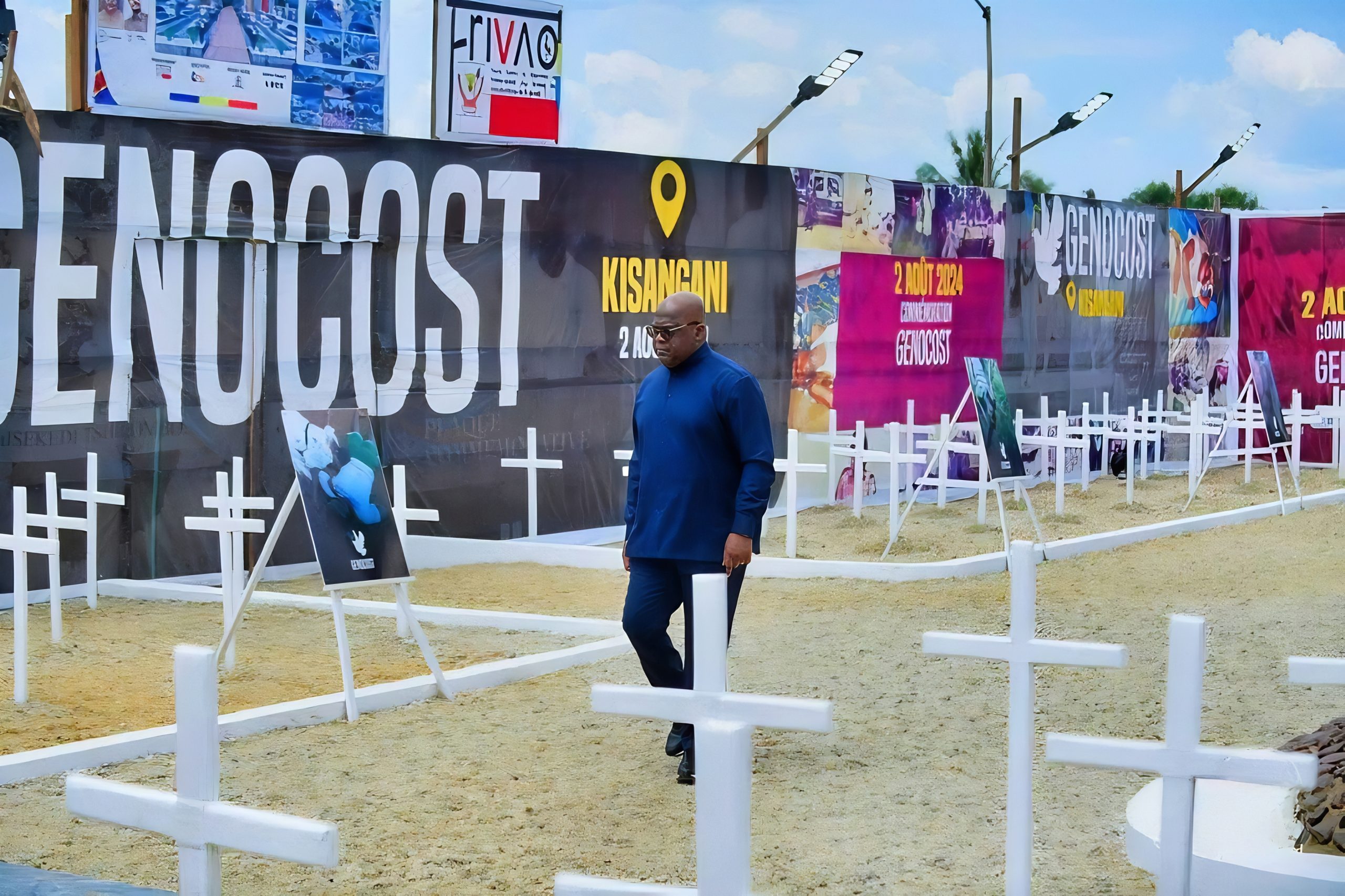
A noteworthy gesture was recently made by the Head of State at the Kisangani memorial. This act of homage serves as a solemn acknowledgement of the pain and suffering endured by the victims and their families. The memorial, which comprises three steles, serves as a potent symbol of the violence inflicted upon the innocent.

The memorial serves to commemorate the lives of those who were cruelly taken, their bodies discarded into the Tshopo or Congo rivers, those buried alive in mass graves, and those who vanished without a trace. As the adage states, “History is not merely about the past; it is also about the lessons we elect to learn.”
The Long Road to Justice
The pursuit of justice and reparations for the Kisangani tragedy has been a lengthy and arduous process. In 2005, the International Court of Justice (ICJ) ruled that Uganda was accountable for human rights violations in the Democratic Republic of Congo (DRC), including the events in Kisangani. The ICJ ordered reparations, and by 2022, the court had awarded $325 million in compensation to the DRC. This constituted a significant step towards addressing the harm caused, but as the adage goes, “Justice delayed is frustration played.”
Nevertheless, the process of recovery remains incomplete. The lack of individual criminal accountability for the atrocities remains a significant source of frustration for those affected. In April 2023, the government of the Democratic Republic of the Congo (DRC) established a national trust fund with the purpose of administering compensation to victims and survivors, marking a step towards rectifying this historical injustice. Nevertheless, the postponement of the disbursement of these funds has resulted in unrest among victims, who are entitled to closure and recognition. This is a textbook example of bureaucratic inefficiency, akin to the pace of a snail on vacation.
More Than a Memorial
The Kisangani memorial and the recent tribute by the Head of State are not merely commemorations of the past; rather, they serve to honour the memory of those who perished and to underscore the ongoing need for accountability and justice. Such commemorations serve to acknowledge the ongoing struggles for justice and the pressing need for a collective commitment to prevent such tragedies from recurring. This constitutes a call to the international community to extend support to victims and strive for a future in which economic interests do not come at the cost of human lives and dignity. As has been observed by many, failure to learn from history leaves us vulnerable to repeating its mistakes.
In considering the events in Kisangani, it is imperative to acknowledge that beyond the statistical data and legal proceedings are individuals who have endured significant suffering. It is imperative that the experiences and psychological impacts of these events are not overlooked. The pursuit of justice and reparations is not merely a legal obligation; it is also a moral imperative. This is because it honours the memory of those who have lost their lives and affirms the value of every human life. In conclusion, as the adage states, “Justice is the sole means of healing a wound, not merely covering it.”
Honoring the Memories: A Solemn Tribute in Kisangani
On a day characterised by introspection and solemnity, the Head of State took the opportunity to pay tribute to the memory of those who endured suffering during one of history’s most tragic periods. As he stood at the memorial dedicated to the victims of the economic-driven genocide in the Democratic Republic of Congo (RDC), a poignant silence descended upon the surroundings.

“It is not merely a matter of recalling the past; rather, it is of paramount importance to ensure that such atrocities are never repeated,” he observed, underscoring the significance of such commemorations.
A Moment of Reflection: The Six-Day War
The memorial is dedicated to the victims of the infamous six-day war in Kisangani, a conflict that saw the Rwandan and Ugandan armies engage in combat, resulting in significant loss of life and devastation.

As the Head of State bowed before the three solemn steles, each of which served as a stark reminder of the emblematic victims of this tragic event, the gravity of the occasion was underscored.
The Three Steles: Symbols of Suffering
Each stele provides a distinct account of the traumatic events that transpired. One represents the victims who were tragically thrown into the Tshopo or Congo rivers, another stands for those buried alive in mass graves, and the last symbolises those who remain missing to this day. It serves as a stark reminder that history is not a subject that can be evaluated based on personal preferences. “It is there for us to learn from.”
In such moments, we are reminded of the importance of remembrance and the capacity of the human spirit to withstand adversity.
The Significance of Memorials
Memorials serve an essential function in preserving the memory of the past, ensuring that the pain and sacrifices of those who suffered are never forgotten. Such structures are not merely physical edifices; they are also potent symbols of resilience and a dedication to peace. The Kisangani Memorial serves as an enduring testament to the resilience of the human spirit and the collective memory of a nation striving to heal and move forward.

The Head of State’s visit serves to underscore the enduring commitment to acknowledging past atrocities while simultaneously fostering a future of unity and reconciliation. By commemorating the victims, there is an aspiration that such catastrophes will never befall humanity again.
The Role of International Community
It is of the utmost importance that the international community provides support to nations such as the Democratic Republic of Congo in their pursuit of recovery and development. Global awareness and assistance can help to prevent further conflicts and promote sustainable peace.
It is recommended that organisations across the globe engage in discourse, provide humanitarian assistance and support initiatives aimed at ensuring justice for those affected by such conflicts. It is of the utmost importance that the international community plays a pivotal role in reinforcing the lessons of history and ensuring that the voices of the victims are heard and remembered.
Education and Awareness
Education represents a potent instrument for the prevention of future conflicts. The dissemination of historical knowledge to younger generations provides them with the requisite understanding and insight to facilitate the creation of a more peaceful and inclusive global community. It is recommended that schools and other educational institutions integrate lessons from history that emphasise the significance of peace, tolerance, and understanding.
Furthermore, initiatives to raise awareness through the media, literature, and public discussions can contribute to the development of a more informed and empathetic society. It is through awareness that the significance of memorials and the stories they tell can be truly appreciated.
Community Involvement
Local communities are of crucial importance in the preservation of historical memory. The involvement of communities in commemorative activities serves to maintain the historical record in a state of active awareness and relevance. Such initiatives empower individuals to assume ownership of their history and contribute to a collective narrative of healing and resilience.
Community-led initiatives, such as commemorative walks, educational workshops and storytelling events, have the potential to foster a sense of collective identity and purpose. Such activities serve not only to honour the past but also to inspire hope for a better future.
In conclusion, it can be stated that… A Call to Action
The solemn tribute in Kisangani serves as a powerful reminder of the importance of remembrance and the commitment to peace. It constitutes a call to action for individuals, communities, and nations to collaborate in the construction of a world where such tragedies are a distant memory.
By commemorating the victims of past atrocities, we can facilitate the process of healing and reconciliation. It is incumbent upon us all to guarantee that the lessons of history are not eroded and that the future is characterised by peace and unity.
In reflecting on the past, it is also important to look forward with hope and determination to create a world where every individual can live in dignity and peace.
Joram Jojo

- The Kagame Doctrine: How Rwanda Uses State-Sponsored Terrorism to Destabilise the DRC - December 21, 2025
- A Nation Assembled: Tshisekedi’s State of the Nation Address in Kinshasa - December 10, 2025
- Washington Accords: Can a US-Brokered Peace End the Congo-Rwanda War? - December 5, 2025
RELATED PUBLICATIONS:
 The Silent Genocide in DR Congo: A Tale of Forgotten Suffering
 PATRICE LUMUMBA AND THE CONGOLESE INDEPENDENCE
 WHY VITAL KAMERHE HAS A ROPE AROUND HIS NECK
 THE DENUNCIATION OF BISHOP PASCAL MUKUNA
 THE SITUATION IN BUNIA AND THE PROVINCE OF ITURI IS COMPLEX
 THE CHRONIC MASSACRES OF CONGOLESE
 THE M23 TERRORIST OUTFIT ARE RUNNING EXTORTION RACKETS
 M23 TERRORISTS CARRY OUT NEW ATTACKS ON CONGOLESE CIVILIANS
 ADF has intensified its attacks against DRC civilians
 Célestin Tunda ya Kasende is leaving Félix Tshisekedi’s Government
 NYIRAGONGO VOLCANO ERUPTION CAUSED PANIC IN GOMA CITY
 THE CONGOLESE ARMY IS DETERMINED TO RESTORE PEACE
 THE FIGHTING WITH UGANDAN AND RWANDESE TERRORISTS CONTINUES
 The Future of the Democratic Republic of Congo at stake
 SALOMON KALONDA IDI DEPRIVED OF HIS PASSPORT
 THE ARMED FORCES OF DR CONGO CONFIRM A PLAN TO BALKANIZE THE COUNTRY
 Congolese solidarity fund against covid-19 pandemic
 BENI CALLS ON THE ARMY TO REVIEW ITS STRATEGIES AGAINST ADF
 Respect Human Rights, During the COVID-19 Pandemic
 ALLIED POLITICAL FORCES OF THE UDPS,FPAU
 ALLIED POLITICAL FORCES OF THE UDPS
 THE ESTABLISHMENT OF MINEMBWE AS A COMMUNE IN SOUTH KIVU
 SERIOUS HUMAN RIGHTS VIOLATIONS BY M23 TERRORISTS
 THE DR CONGO HAS NO TRIBE CALLED BANYARWANDA